
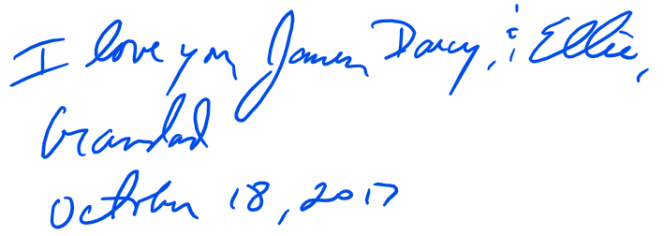
Dear James, Darcy, and Ellie,
You’re not aware of it, but standing for the national anthem and the American flag has become a subject of passionate debate. Particularly noticed in professional football (which may mean “soccer” by the time you read this), some players are kneeling during the anthem as a sign of protest against injustice in our country. Since the platform occurs during the anthem and presentation of the flag, the focus has shifted from its intended call for justice for all and morphed into respect for the flag. The conversation has gone even deeper than disrespect; kneeling has come to reflect disregard for those who have served in the military.
I didn’t serve in the military, nor do I know of anyone in our immediate family who did. I had an uncle, my father’s brother, who served, in addition to countless people in churches that I pastored. But I personally have never carried the flag into battle or seen it planted in a field where I just lost close friends who were more like brothers. My lack of personal experience notwithstanding, I do have a profoundly deep respect and appreciation for those who have defended our country, and even have died, for the freedoms that we enjoy. Without their sacrifices, I doubt that I would have the freedom to write these words. Without their sacrifices, I would not have been free to preach whatever I felt were God’s truths for over 35 years. I hope that you three develop similar gratitude, but I also pray that you don’t have to acquire it through your service in a war. I now place my hand over my heart from my wheelchair, but I stood when I was able. The symbolism of the anthem and flag represents my own patriotism and honor for those who served. I do not take my freedoms for granted, and I am grateful.
What do I think of the current debate? Since I don’t have the military frame of reference, I turn to my life context: faith, religious history, and church practice. The most prominent symbol in the church is the cross. While there is absolutely no appropriate comparison between the flag and the cross (and my Baptist religious freedom tradition makes me cringe at even putting them in the same sentence), my thoughts about the cross guide my thoughts about the flag in its current controversy.
Every church I pastored displayed a cross in the sanctuary. Some had very beautiful and expensive crosses, which seemed indirectly to sterilize the tortuous death of our Lord. Others had wooden, rugged crosses, apparently in an attempt to be more “authentic.” Some were in the center of the altar, and their placement there was protected as though its movement would create something out of an Indiana Jones movie. When the location of the cross remained the same Sunday after Sunday, I wondered if its familiarity caused it to go tragically unnoticed to regular worshipers. The church I attended as a child hung a huge cross above the baptismal waters, causing young, daydreaming worshipers (like your grandad) to wonder what would happen if it fell. However the cross was postured, it became part of that individual church’s lore.
The placement, the construction, and the cost of the crosses are immaterial. After all, the cross was never meant to become decoration. It was an instrument of anguish and slow, agonizing death. It was the means by which people murdered our Lord. Frankly, we ought to cringe when we see a cross. We have even taken our casualness to an inappropriate step further: we wear this brutal device as jewelry! When the cross loses its symbolism as the tortuous death of Christ through His ultimate love for us, we have lost our way.
My unparalleled respect for all that the cross represents makes it the most revered symbol in my life. Secondarily to it are a wide array of symbols that also have value in my life, one of which is the American flag. Symbols of any kind are supposed to call us to something else, usually to something greater than the object itself, even calling us to something greater than ourselves.
The flag represents what is good about our country, including our liberty and our justice. It calls us to honor the sacrifice of men and women who earned the freedoms that our country enjoys. Given the symbolism of all that our flag represents, we should all stand for the presentation of our flag and anthem if we are able. In my opinion, that includes our fellow football-playing citizens. (By the way, while we are considering proper behavior before the flag, someone should also rethink those massive flags that are held horizontally across the entire field, as well as the flags that appear on the football helmets. Both of these actions appear to violate the United States Code for the flag (https://www.gpo.gov/fdsys/pkg/USCODE-2011-title4/html/USCODE-2011-title4-chap1.htm).
Stand for the anthem and the flag? Yes. But not out of habit or political correctness. Stand because the flag takes us to the field of sacrifices made for our freedoms. But what about injustice, the original reason for kneeling? Injustice goes against everything that the flag represents. Injustices toward each other do far more to harm the flag than kneeling ever will. We should all stand up against injustices to anyone, but let’s never denigrate the flag that represents why injustice is so wrong in the process.
 On Second Thought
Excellent essay, Allen. Thank you for expressing so clearly what so many of us believe.
LikeLike
Thank you so much for reading and for your nice comment, Dick. Blessings, Allen
LikeLike
Again your words move me thanks for who you are and the Lord Jesus Christ you serve
LikeLike
Thank you, friend. Blessings to you and your family, Phil.
LikeLike