Category: Monologues

My Cross to Bear

A Note from Laurie: I have always loved the book, “My Utmost for His Highest,” by Oswald Chambers. His wife Biddy reportedly ensured her late husband’s words were published, albeit posthumously. I have been encouraged for decades by our friends and former church members to share some of the vignettes that Allen wrote every year during Lent to help us grasp, hear, feel, smell, touch, and experience the time of Christ, the world surrounding Jesus, during His journey to the cross. This is one of those stories, from the possible perspective of the carpenter who made the cross of Jesus.

From the time that I was a very young boy, I loved to work with my hands.  Creations of wood came so naturally to me that my little carved pieces became a part of my identity.  I developed a reputation for making perfectly shaped household utensils, smooth decorative items, and charming children’s toys.  Some people even called it my gift, and I knew that came with a responsibility.  If God had given me the gift, then I had to use it in ways that glorified Him.

My lifelong dream became reality when I opened my little carpentry shop in Jerusalem.  There was not a great deal of monetary reward in my trade, certainly not with my specializing in small objects, but I loved it nonetheless.  Eventually though, the financial demands of supporting a family forced me to rethink my career.  Handmade bowls and spoons do not pay the bills.  As with many things, survival became the more important choice over enjoyment.  I made the difficult decision to give up my intricate, small works of art to start making more lucrative products in a more viable niche market that could supply a steady stream of income.  I reluctantly realized that meant meeting the needs of, and selling items to, the patronizing, haughty Romans.

With their militaristic priorities, Romans were in constant need for spears, shields, and other tools of war.  Most contemptibly, Romans were keenly interested in procuring crosses, deplorable devices of death on which they hung their condemned prisoners.

Even though I dreaded affiliation with the ghastly enterprise of crucifixion, I nevertheless knew that I would have steady income if I simply justified my actions and betrayed my convictions. I did not see another alternative; I just hoped that God would forgive my misusing the gift He gave me.

My aversion notwithstanding, I reluctantly began making crosses for the Romans.  I resignedly rationalized my decision by reassuring myself that I had to feed my family, and theoretically, I was doing the world a favor.  Only the worst criminals would be sentenced to hang on one of my crosses, right?  Oh, we humans have such a way of justifying anything. 

My first order arrived a few days before Passover–two crosses, plus the possibility of one additional for a spare.  “Who knows when a last-minute name might be added to the execution list,” they mentioned, nonchalantly.  My instructions were straightforward.  The measurements and weight of the wood would always be the same, and each cross should be roughly cut.  Coarse knots and splintered edges were more desirable as to inflict more pain on the prisoner.  Since I specialized in small, smooth pieces, producing a rough, large cross was certainly not my forte.     
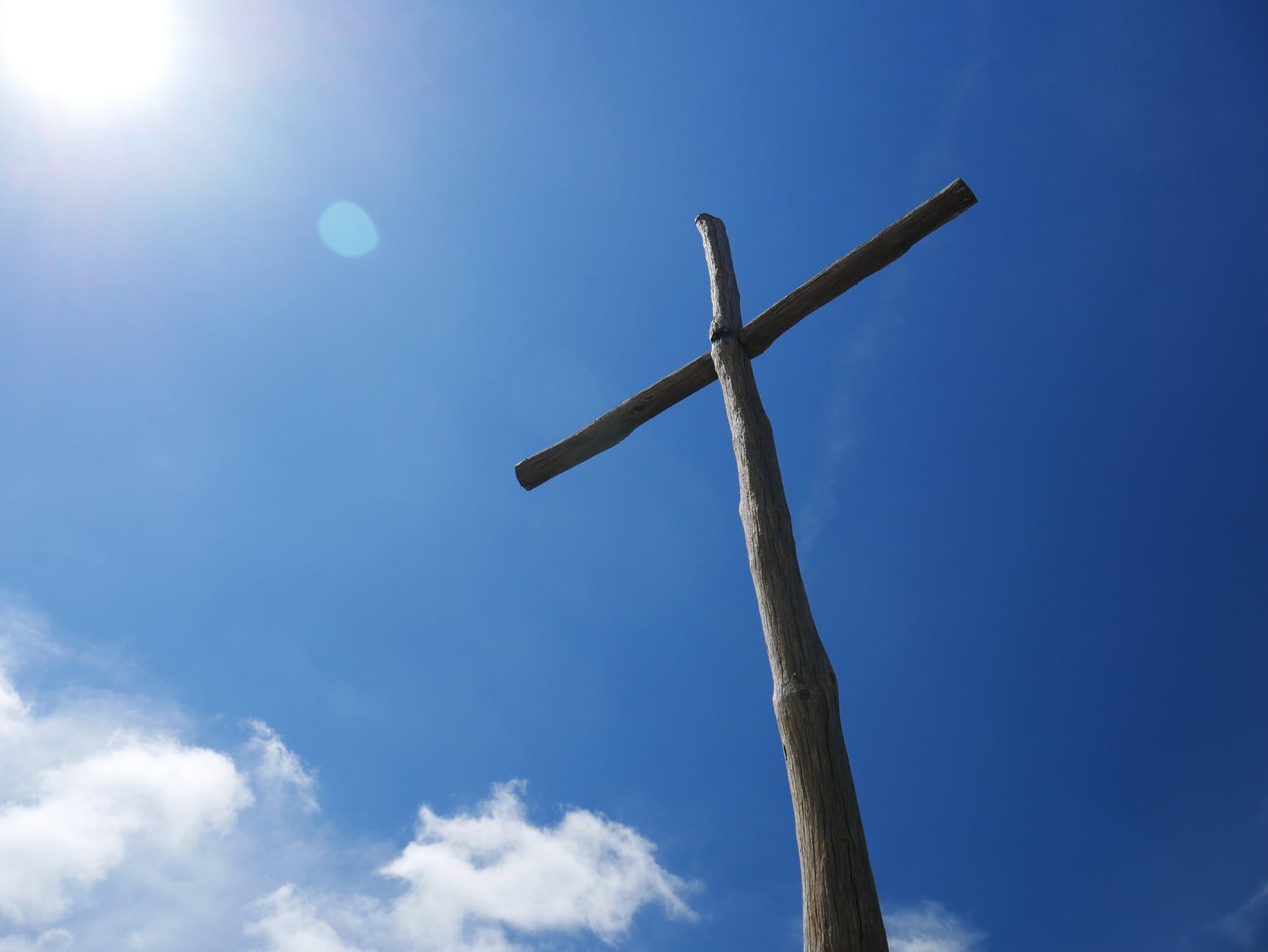

Photo by Pixabay on Pexels.com

With all the pilgrims arriving for Passover, business would surely increase for all of us shopkeepers.  Now, with the addition of these crosses, this important week could simultaneously accelerate my business and relieve financial pressure.

I worked tirelessly, assisting my Jewish customers in selecting small household items, while understandably keeping my cross-making process in the back of the shop.  I could not risk any of my customers seeing the tortuous horrors I was building.  How devastating it would be if they found out that the same hands that had skillfully crafted their bowls and utensils, or toys for their children, had also built a cross on which some of our own people would be sentenced to die.

On Thursday evening at closing time, several Roman guards came to pick up my two newly finished crosses.  As they dragged the crosses away, I fleetingly wondered who would end up hanging on them.  No time to worry about such things, however, for I had a religious meal to attend.

On Friday morning, I was busily arranging all my wooden carvings in hopes of another robust business day.  Right before my store opened, however, the Roman soldiers came back to get one additional cross.  They had one more last-minute crucifixion.  I gave God thanks that I had finished the spare in time.

A couple of hours later, I heard a boisterous commotion in the street in front of my shop, undoubtedly a horrible Roman crucifixion underway.  Crucifixions passed by regularly, as my shop was on the road to Golgotha.  I never paid much attention, but I had a vested interest in the proceedings now.  I went out to critique my handiwork as the procession shoved forward, but the teeming crowds blocked me and obstructed my view.  Undeterred, I followed the procession all the way to the Hill of the Skull.  I needed firsthand confirmation that all was satisfactory to my customers, even if it meant a long trek.

When the crosses were hoisted towards the heavens, I could finally see my work.  I’m not sure what I expected from the experience, but I found no sense of satisfaction or accomplishment.  Instead, I was overwhelmed.  I was overcome with acute, relentless sadness.  My eyes were drawn to the man hanging in the middle.  There was a sign that identified him as Jesus.  I had heard stories about Him, that He was a miracle worker who always spoke about loving God and loving each other.  I couldn’t imagine why they were executing Him, of all people!  I felt such a dark, hollow emptiness that they were torturing Him with my cross.

Then, our eyes met.  I will never forget His eyes.  He looked at me like He knew me.  He knew my past, present, future. I instantly realized He also knew that I had made His cross, but He was forgiving me for it.  His were the eyes of pure love.  Distraught, I turned away.  I had to get away from this; I could not stand to watch another second.  I was causing Him this pain.  It was my cross on which He was hanging.

As I turned, Jesus cried out, “… Father, forgive them, for they do not know what they are doing… (Luke 23:34).”  The problem was that I had subliminally known what I was doing, yet I did it anyway. Now I knew in full what I had done.  I was an accomplice to His murder.

I ran all the way to my store.  When I got there, I slammed the door shut.  I grabbed my hammer and started smashing every piece of wood that was to become a cross.  Roman contract or not, I had to get rid of all of it.  NOW.  Finally, after about an hour of weeping uncontrollably as I destroyed the cross pieces, it was finished.  Nothing was left to remind me of those crosses, nothing except the indelible mental image of Jesus.  On my cross.

Through the kaleidoscope of my tears, I saw a couple of small carvings scattered on the floor.  I bent over to pick them up, and I discovered that when I had flung one of the cross pieces, I had accidentally broken one of my most treasured pieces of art.  It was an intricately carved, precious lamb. 

I had broken the lamb with a cross.

If Donkeys Could Talk

Have you ever heard my story, that of a talking donkey?  In spite of the obvious temptation to formulate a meme at my expense, I am going to share my story anyway.  We donkeys appear numerous times in your Bible, but usually only in practical references to carrying your loads of cargo.  But on at least three occasions, we profoundly impacted your faith family.

One of our most famous biblical spotlights occurred during the years of the Exodus.  God’s children were camped on the plains of Moab across from Jericho.  The king of Moab saw the hordes of Israelites gathering in his territory and knew that he had to confront them.  Fearing that their military prowess was far too great for him, he called for a sorcerer named Balaam, who could reportedly bring good on those he blessed and evil on those he cursed.  The king summoned Balaam in hopes to hire him to curse the Israelites. 

That’s where my ancestral lineage entered the story.  Balaam climbed aboard his donkey for the journey to the Israelites’ camp.  Along the way, the angel of the Lord appeared three times to stop Balaam from carrying out this evil plan.  Each time, the donkey saw the angel in the path and stopped, and each time, Balaam beat the donkey for not going forward.

That’s when it happened…the talking donkey moment.  My ancestor, Balaam’s donkey, complained about his treatment: “…What have I done to you to make you beat me these three times?” (Numbers 22:28).  As though words from a donkey were not strange enough, Balaam gets into an argument with … his donkey.  God interrupted this ludicrous dispute by also opening Balaam’s eyes to see the angel of the Lord standing in front of him, stopping him in his tracks and preventing his going to the Israelites. 

Which was the greater miracle: words from a donkey’s mouth or divine vision for a mercenary sorcerer?  Perhaps instead the greatest evidence of God’s intervention might have been that the lowly donkey saw God’s messenger on the path.  In spite of our reputation for being stubborn and set in our ways, Balaam’s donkey saw God’s presence and submitted to the divine authority.  It is rather humbling to know that my family line played a part in God’s children entering the Promised Land.    

Another well-known appearance of my family lineage occurred during the transport of Mary from Nazareth to Bethlehem.  For the census of Caesar Augustus, everyone returned to their hometown to be counted.  But there was a holier mission at stake.  Mary, Joseph, and their unborn child traveled to Bethlehem where the babe was to be born.   Talk about precious cargo.  Mary was expecting her child any moment.  Yet, historical prophecy depended on her arrival in Bethlehem before the baby was born.  Again, this important task was assigned to a forebear of mine.  Not wanting to do anything that could interfere with the ordained time and place of the child’s birth, the donkey carefully navigated every step, avoiding a rock that might trip him or a divot that might cause a stumble.  The tenuous trip was successful, as you undoubtedly know, and the Son of God was indeed born in Bethlehem. 

I know I have a different perspective on this, but why doesn’t the donkey get any credit for the smooth, uneventful journey?  The Gospels never mention a donkey in the story.  If it weren’t for pictures on the cover of Christmas greeting cards, the world may never have even considered the presence of a donkey at all!  But there was my ancestor, doing a thankless job once again.  No recognition.  No praise.  Just doing what donkeys do.  He carefully carried his consignment to her destination.  The difference was that this time, the payload he carried was a soon-to-be mother, along with her future Savior of the world.

What does Balaam’s talking donkey have in common with the unmentioned donkey that carried Mary and the unborn Jesus?  They share one of the common traits of our species: dependability.  One of our trademarks is that we persistently press on and move forward, doing whatever job assigned to us, persevering against physical odds.  We do the work.  That is what we do.  That is why we are sought.

A third mention of our family line occurred in the event in which I was personally involved.  One day, some men came to lead me away from my home.  The only reason I overheard was that the Lord needed me.  Before long, I realized I was carrying Jesus on my back, winding my way through throngs of people!  People were singing choruses from the Scriptures about His blessed coming in the name of the Lord.  They were lining the path before us with their cloaks.  I kept steady in spite of the uncertain footing of clothes underfoot, not to mention the startling palm branches unexpectedly waving all around me.  Just as my ancestor who carried Mary thirty-three years earlier, I knew that I had someone special on board.  I walked deliberately, proudly, and cautiously.

We arrived in Jerusalem at the temple, and just like that, I retreated again quietly into the shadows of history, just as my ancestors had done.  After all, the story has never been about me or my ancestors.  We simply carried out our assignments with humility and dependability.  And now, my job was finished.

People have tried to keep my memory alive over the years by developing stories of what I did after I delivered Jesus to Jerusalem.  One of my favorites is that I happened upon Golgotha on Friday.  I had not been able to forget my passenger of a week earlier.  He was so kind, so gentle, so soft-spoken.  On that grotesque hill, I could not imagine why anyone would want to crucify Him.  Your legend about me claims that I was so drawn to Jesus that I stayed at the foot of the cross that Friday, but it was so painful that I turned away so as not to watch the pain He was suffering.  In appreciation of my love for Him, Jesus caused the shadow of the cross to fall across my back.  Just as I had carried Him on my back into Jerusalem, I would now carry His cross on my back as a forever symbol of His love.

Photo by Leroy Huckett on Pexels.com

The next time you see a donkey, look at his back.  You will see the cross.  The markings of a cross can be visibly seen on the back of almost all donkeys.  It is a reminder of the day I fulfilled my task with the Savior. That is why I have passed this story on down through generations. 

You can decide if you believe the story of how we donkeys got our mark of the cross or not.  But what is more important is for you to recognize how faithfully we fulfilled our tasks in Scripture.  We did our job by protecting the Israelites on their journey to the Promised Land by causing Balaam to submit to the angel of God, by gently cradling the expectant Mary so that the Child would be born in Bethlehem as God had predetermined, and by carefully hoisting the Lord on my back as we marched triumphantly into the Holy City to announce His kingship. 

My legacy is a challenge to you.  What is your role in lifting up the Lord to further His mission?  What must you do to bear the mark of Jesus on your back?  Whatever is your purpose, may you find it and do it.  You may not get any praise.  You may not even be mentioned.  You may not even be noticed.  But you will know what you have done.  Most importantly of all, our Lord will know what you have done.  Then, you will have made a difference.

Christmas 2020: A Perspective from Job

Consider these words that Job might say to us today.

My name is one of the most referenced in all of history, which is rather odd since you rarely, if ever, name your children after me. Instead, my name is more of a condition, synonymous with pain and loss.  

When life becomes especially challenging, you seem to find comfort by invoking my presence as a fellow struggler of old. “I feel like Job,” you groan. The union of kindred spirits brings consolation, even if the two souls are separated by millennia.

I may be the last character from whom you would expect to hear during the Christmas season. I don’t exactly remind you of tinsel and mistletoe. But Christmas 2020 feels less like holidays and more like holy-daze, a sacred time in which even the most faithful are confused about God’s presence in such a struggling world. This may very well be the year that finding Job in Christmas makes sense.

Before my story became one of pain and despair, it was filled with an abundance of blessings, including a large, close-knit family, a vast wealth of livestock, and numerous workers to manage one of the greatest businesses in the land.

It would have been easy to rely on the security that our riches provided, but I worked intentionally to guide my family through the proverbial camel’s eye of the needle. As you know, even God himself took notice of my devotion: “…There is no one on earth like him; he is blameless and upright, a man who fears God and shuns evil” (Job 1:8). My deep faith is what positioned me at the center of the spiritual challenge between God and Satan.

Theological inferences notwithstanding, this otherworldly contest between good and evil had devastating effects on my earthly life. I lost my workers and my animals to violent raids of robbers. Others died when fire swept through parts of my land. Eventually, I had no way to make a living. Everything I had built was gone. Just when I thought things could not get any worse, I received the devastating news that my children had been killed in a wind storm. My grief was palpable. I lost everything. Eventually, I would lose my health. My wife would challenge my spirituality, and my “friends” would question my integrity. But through it all, I kept the one thing that could not be taken away…I kept my faith.

As I said when the unimaginable happened: “…Naked I came from my mother’s womb, and naked I will depart. The Lord gave and the Lord has taken away; may the name of the Lord be praised” (Job 1:21).

“I feel like Job” is commonly a lament that you are suffering like I did. In truth, your pandemic has certainly created misery that rivals mine. The widespread death, the lonely struggles in ICU rooms, the fears of susceptibility, the mystery of a novel virus, and the loss of jobs are just some of your afflictions.

Some of you would be in grave danger if you were to face symptoms from the virus. Illness, age, or some other condition has diminished your ability to fight it. I see myself in you, hearing all the COVID-19 arguments, but being reluctant to participate in the debate because it’s too personal. Your friends argue what’s right or wrong: mask or no mask, indoors or outdoors, 6 ft. or 12 ft. or 0 ft., in-person or virtual, vaccine or no vaccine. It’s hard to enter the fray when you feel like it’s your life in the middle. I had friends with strong opinions too, as I sat in the middle of a cosmic battle between right and wrong. Yes, some of you really do “feel like Job.”

But here is my challenge to you: keep the faith through your pain. Centuries after my story was first told, I appeared in your New Testament among the writings of James. He wrote: “As you know, we count as blessed those who have persevered. You have heard of Job’s perseverance and have seen what the Lord finally brought about. The Lord is full of compassion and mercy” (James 5:11). The greatest tribute you could give me is not to compare our afflictions, but rather to equate our endurance.  

I encourage you to find ways to express persistent faith in the pandemic. For instance, I have heard of one of your families who has turned social distancing into a faith-filled lesson for their children. The parents (we’ll say their names are Katherine and Eric) have three small children. Both Katherine and Eric’s fathers have conditions unsafe around COVID-19. They could spend these months grumbling about how their children are missing pivotal time with extended family. Instead, Katherine and Eric seize the teachable moment by explaining to their children that social distancing around their grandfathers is a way to say “I love you.” The principle that love conquers coronavirus is a truth that will far outlast the pandemic.

I long for the day when comparing oneself to me is not about misery, but rather it is about keeping the faith through the misery. Then my legacy would no longer be what I suffered, but rather how I persevered through it.   

You face a formidable test during this Christmas season. Decades-old traditions may be altered. Family gatherings may be smaller. At best, Christmas 2020 will look different.

My hope for you is that during these days of Job-like suffering, you will take opportunity to find Job-like, persevering faith.

Be still in the midst of the madness.

Avoid the distractions of divisiveness.

Look carefully in the loneliness.

That is where the Child still comes to meet you.

Merry Christmas,

Job

__________

Scripture quotations are from the New International Version.

The Year 2020: A Perspective from Simon the Zealot

Consider these words of what Simon the Zealot might say to us today:

“Why did God’s Son ask me to join his band of followers? My very presence put the entire mission in jeopardy. The Romans thought of me as an enemy who plotted against their government. Why would Jesus take the risk of associating with me?

My name is Simon. They called me Simon the Zealot, which distinguished me from Simon Peter. You recognize my name as one of the twelve disciples. But beyond my inclusion in the lists of disciples, your Scriptures make no other reference to me. Not a single word of mine is ever recorded. As you will learn, that may be a good thing.

I was a member of the group of people known as the zealots. Our movement among the Jewish people was driven by our distrust and disgust of Roman rule. Submitting to Caesar was nothing short of idolatrous, so we were steadfast in our resolve to prepare the way for our Messiah to set up his kingdom. Toward that end, we created problems for the Romans at every opportunity. Now you understand why the Romans hunted people like me and why I put Jesus and his disciples in danger by my very presence.  

One especially degrading tool that the Romans used to subjugate us was to tax us. Why should we pay money to Caesar, when only God was worthy of our allegiance? To make matters worse, the Romans employed some of our own Jewish brothers to collect their taxes. That was the final straw. We had to stop this blasphemous practice of Jews taxing fellow Jews to fill the coffers of Rome. As a member of the zealot party, I was willing to use violence against these Jewish tax collectors who sympathized with Rome and betrayed their own people.

Into this rancorous world entered a carpenter from Nazareth. When Jesus tapped me to join his group, he looked at me like he knew me. I figured that he had heard of my passion for Jewish independence. I accepted his invitation, thinking that it might be an opportunity to meet like-minded people. At the very least, Jesus had a certain charisma about him that evoked trust and confidence, and such traits could be useful in our zealous mission against Rome.

I will never forget when I first met the other disciples. There were two sets of brothers who were fishermen by trade, along with several other men who seemed to listen to the fishermen. And then, it happened. Jesus introduced me to Matthew, but Matthew did not need an introduction. I already knew him all too well. He worked the tax booth along a road through town. The Romans knew that the right kind of person to sit in the tax booth was one who was willing to turn against his own people for money. I was staring straight into the eyes of my enemy, a mercenary who took money from the faithful and gave it to the sinful.

Why would Jesus involve both of us in his work? After all, He knew the hostility between us. As a zealot, it took everything I had to restrain my violent impulse. How could Jesus think it a good idea to have political enemies on the same team, much less working together side by side? What was he thinking?

There were times when I thought Jesus was leaning to my side of the Roman debate, especially when he talked about the kingdom. There was the time when he said, “…the kingdom of God is in your midst” (Luke 17:21). I felt sure that he was declaring himself to be the heart of our coming kingdom. And when he sent us out on missions, he instructed us to say, “…The kingdom of God has come near” (Luke 10:11). And to this day, you regularly quote his words about prayer, “Your kingdom come, your will be done…” (Matthew 6:10). Zealots understood kingdom talk.

At other times, Jesus sounded the opposite of a zealot. He said things like, “…If anyone slaps you on the right cheek, turn to them the other cheek also” (Matt. 5:39). This passive strategy was certainly not going to defeat Rome. And then he would say, “…love your enemies and pray for those who persecute you” (Matt. 5:44). It felt like he was directing that at me. One time Jesus said, “…give back to Caesar what is Caesar’s, and to God what is God’s” (Matt. 22:21). Of course, Matthew would include these words in his book. Do you remember what we were doing when Jesus told that famous story about the prodigal son? We were having dinner with tax collectors. Imagine a zealot breaking bread with a tax collector! Times like these made me wonder why Jesus had ever asked me to come along.

All the while, Matthew and I held our fragile truce. I kept the faith that Jesus would be the victorious leader who would end Roman oppression once and for all. He would then deal with Matthew appropriately. Even when Jesus went to the cross, I was sure that he was going to call down his army of angels to set us free. But it did not happen. When Jesus died, so did my anticipation of crowning him king of the new kingdom. My Messiah was gone.

You know what happened next. Three days after he died, he appeared in the room where we were hiding! I had renewed hope that he might still have a plan to lead us miraculously as the conqueror over Rome. After all, the victor over death could surely defeat the Romans.

We asked him directly, “…Lord, are you at this time going to restore the kingdom of Israel?” (Acts 1:6) That turned out to be our final question. He left us again, ascending into the heavens. I did the only thing I knew to do. I went back with my friends to Jerusalem. And together, we prayed.

During our prayers in that room, my eyes were opened as to why Jesus had asked me to follow him. I finally understood why I had traveled these last three years with this group, one of whom was my sworn political enemy.

I recognized that my whole purpose was to walk alongside Matthew as we followed Jesus together. Jesus did not call me to write a gospel about him or even speak words that others would record in their writings. Jesus wanted me to live a life of faith with Matthew, my enemy. I was there to show generations to come that following Jesus would mean walking with someone with whom we fervently disagreed.

What an electric moment! I was in that room to show you that life with Jesus demands us to be better than our differences. Matthew and I were the first Christians to show that two opposing views can come together under the banner of Christ.

It all came together for me while we were praying. Your Scriptures do not reveal our specific words. But as you might imagine, I prayed for what we should do next as disciples. I prayed for my Jewish people, now that our best shot at revolution had literally just disappeared in thin air. I prayed for the safety of all those who had risked everything to commit to Jesus. And yes, I prayed for Matthew.

That is why I tell you my story today. You are as divided as we were 2,000 years ago, perhaps even more so. You are divided over so much:  politics, race, economics, healthcare, climate, immigration, environment, guns, and the list goes on. Who would have ever thought that Christians would argue over wearing masks?

Be zealous about your beliefs. Be passionate about your concerns. Be fervent about what you think is right. But never allow your differences to obstruct your love for each other in Christ. Jesus said, “…everyone will know that you are my disciples, if you love one another” (John 13:35). The world is watching you in 2020. They want to see if you can love each other despite your differences. Our Savior wants to see that, too. How are you known: by your love for others or by your arguments against others?

My clarity came when I prayed for Matthew. It is very hard to pray God’s best for an enemy; candidly, you will not view them as enemy much longer. Who is your Matthew?”

__________

Scripture quotations are from the New International Version.